If you have ever walked Providence’s East Side and wondered why one block feels formal and early-American while the next feels dramatic, layered, or surprisingly modern, you are noticing one of the area’s biggest strengths. The East Side is not defined by a single look. It is a collection of historic streetscapes, later neighborhood development, and carefully evolving architecture that rewards buyers and sellers who understand the details. In this guide, you will learn the main architectural styles found on the East Side, where they tend to appear, and what those styles can mean for daily living, upkeep, and long-term appeal. Let’s dive in.
Why East Side architecture stands out
Providence planning materials describe the East Side as a layered historic landscape rather than one uniform housing type. That distinction matters when you are evaluating a home, because style here is tied to setting, era, and how well a property fits its street.
College Hill reflects the city’s earliest development and includes some of Providence’s most distinguished historic architecture. Benefit Street, often known as the Mile of History, spans buildings from the early colonial period through early 20th-century three-family houses.
Other East Side areas add different chapters to the story. Stimson Avenue is known for its compact late-19th-century Queen Anne and Colonial Revival homes, while Blackstone developed later around a landscaped boulevard and became one of the city’s most fashionable addresses.
Colonial and early American styles
Georgian homes on College Hill
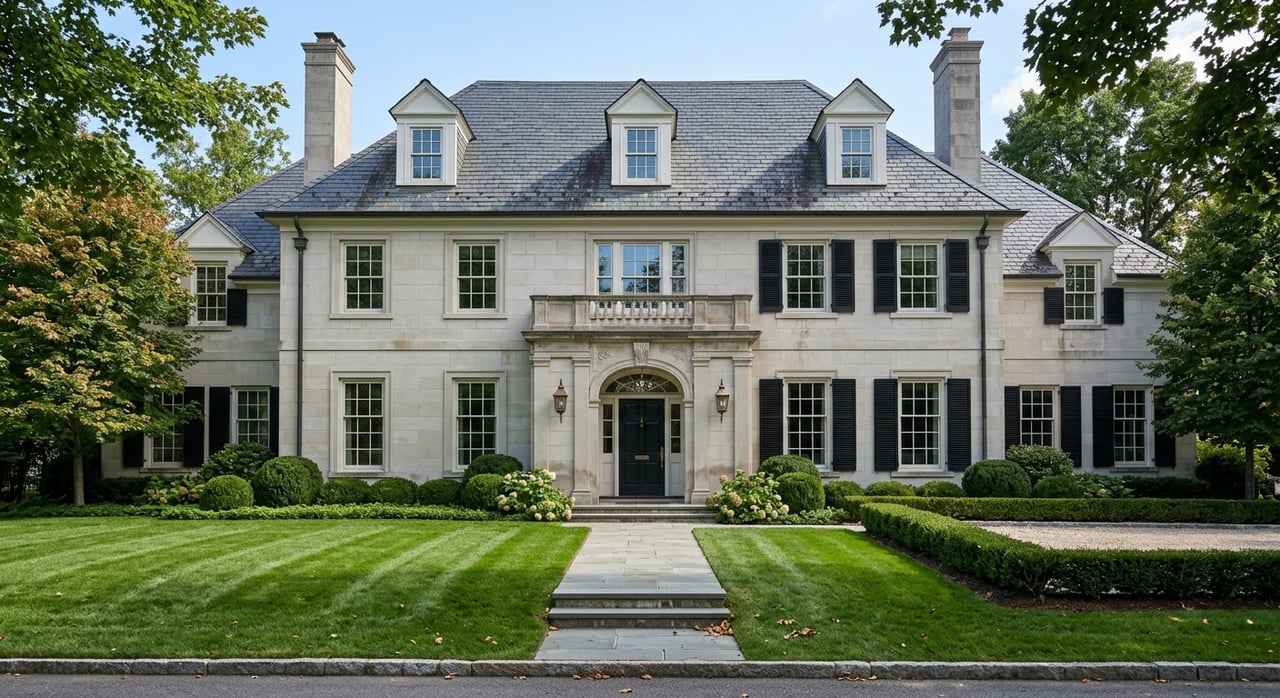
Georgian homes are among the most recognizable early house types on the East Side. They are typically symmetrical two-story houses, often with centered front entries and evenly aligned windows.
These homes usually feel orderly and formal from the street. Inside, they often have more compartmentalized layouts than later homes, which can appeal to buyers who like defined rooms and traditional flow.
Their simpler overall shape can make some exterior maintenance more straightforward. Even so, original wood details like sash windows, shutters, and entry trim still play a major role in the home’s character.
Federal style details
Federal homes keep much of the symmetry of Georgian architecture but often feel lighter and more refined in their detailing. In some cases, they include graceful features such as elliptical or rounded spaces.
For you as a buyer, that can translate to a home that feels historic and elegant without looking heavy. For you as a seller, original details in a Federal home can be a meaningful part of the property’s appeal when they have been preserved with care.
Greek Revival forms
Greek Revival homes often shift from the boxy symmetry of earlier styles toward gable-front forms, heavier cornices, and porch columns. On East Side streets with older housing stock, these homes help show how architectural tastes evolved over time.
This style often reads as bold and architectural from the curb. It can also offer a slightly different interior feel from Colonial and Federal homes, while still sitting comfortably within Providence’s historic streetscape.
Victorian styles with more drama
Queen Anne character
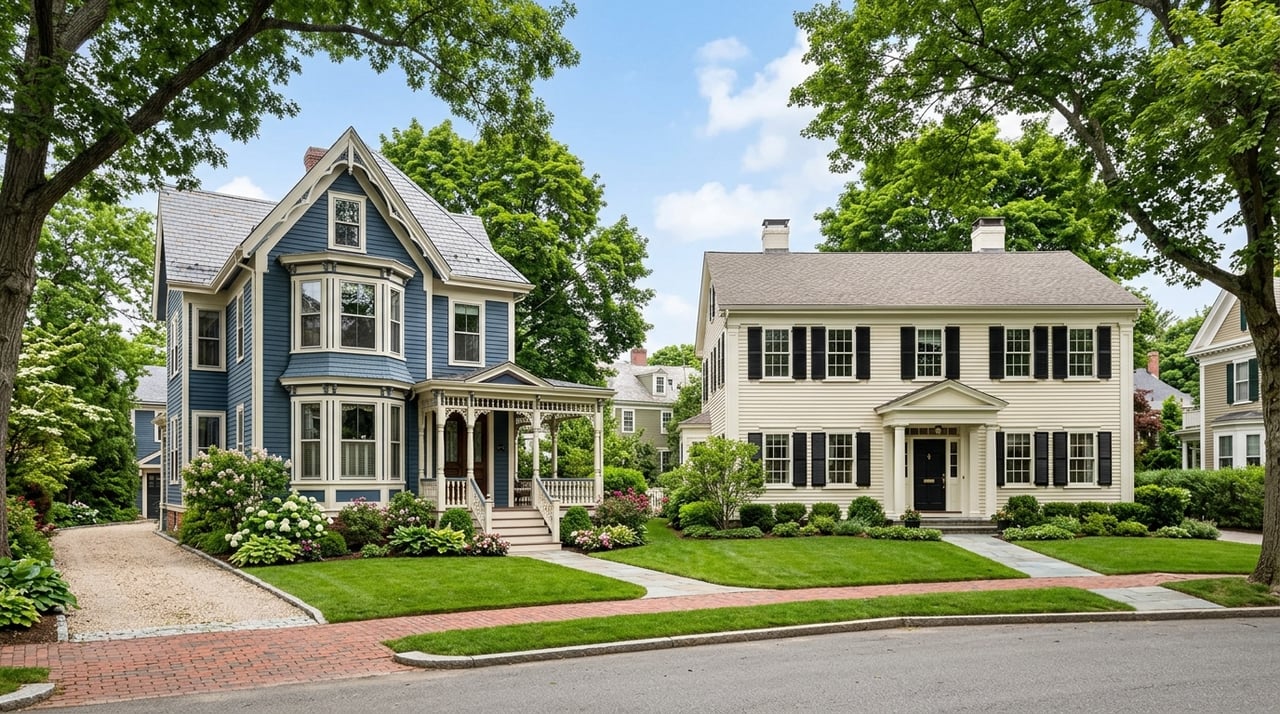
If you are drawn to houses with visual movement and personality, Queen Anne may be the style that catches your eye first. This style typically features asymmetry, bays, porches, turrets, textured shingles, and mixed exterior materials.
Stimson Avenue is one of the clearest local examples. Providence describes it as a quiet East Side enclave of Queen Anne and Colonial Revival single-family homes from the 1880s and 1890s that remain largely unaltered.
For everyday living, Queen Anne homes can offer memorable rooms and striking curb appeal. They can also bring more maintenance because of their complex rooflines, porch elements, trim, and varied surfaces.
Shingle Style influence
Shingle Style homes share some of the complexity of Victorian-era design, but with less applied ornament. Instead, the architecture often relies on continuous wood shingles and strong overall form.
Historic New England notes that Shingle Style was largely a high-style, architect-designed form and was less suited to dense urban settings. On the East Side, you may see elements of this influence more than perfect textbook examples.
For buyers, the result can be a home that feels artistic and substantial without excessive decoration. For sellers, strong exterior condition matters because the style depends heavily on the quality of its surfaces and massing.
Colonial Revival and transitional homes
A style that shaped the 20th century
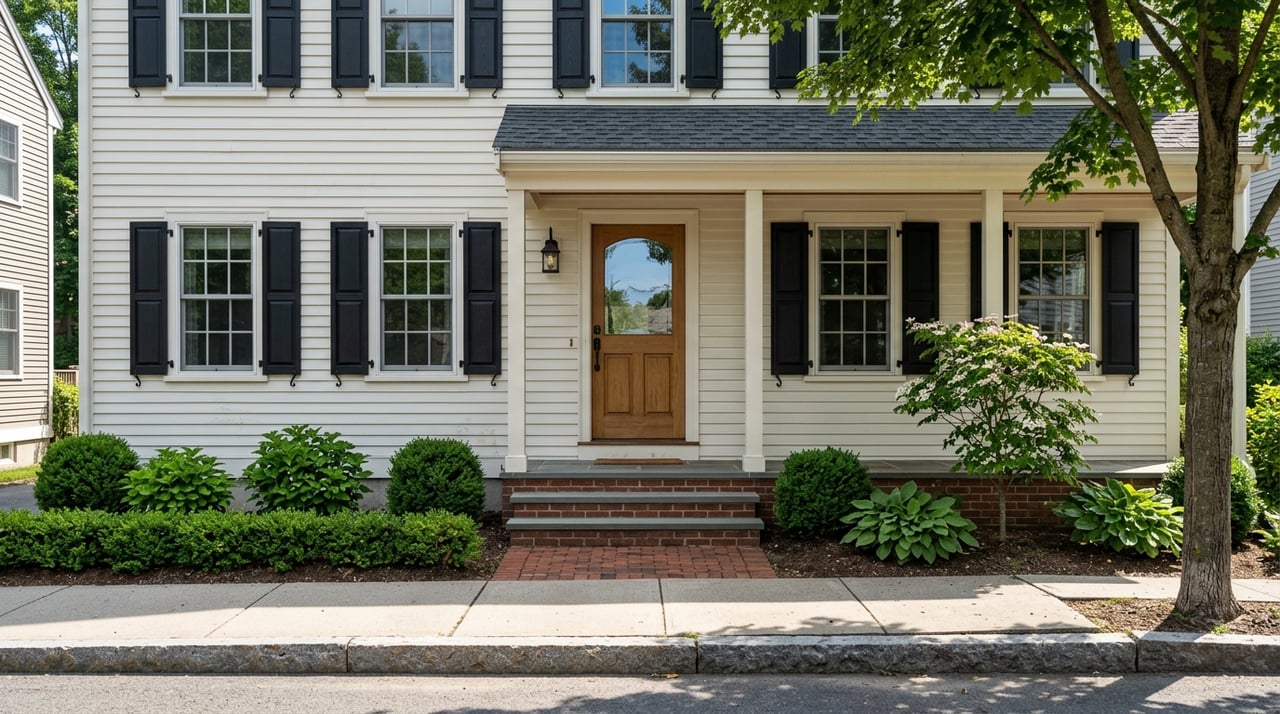
Colonial Revival dominated domestic construction through much of the first half of the 20th century. The style usually features symmetrical facades, prominent entries, and multi-pane sash windows.
Many later Colonial Revival homes also have more open interiors than earlier Colonial-era houses. That often makes them attractive to buyers who want traditional curb appeal with somewhat easier day-to-day living.
On the East Side, Colonial Revival appears both as a primary style and as a later layer added to older homes. Providence Preservation Society notes that some East Side houses received Colonial Revival facelifts, which is common in places where different building campaigns overlapped.
Why transitional houses matter
Not every East Side home fits neatly into one category. Many properties reflect updates, additions, or stylistic shifts over time, and that is part of what makes the area architecturally interesting.
If you are evaluating one of these homes, the key is not whether every detail is “pure.” It is whether the house feels coherent, well-maintained, and respectful of its period and streetscape.
Blackstone, Wayland, and later development
Blackstone’s early 20th-century identity
Blackstone offers one of the clearest examples of the East Side’s early- to mid-20th-century growth. City planning documents say the neighborhood developed primarily during that period with medium- and large-scale single-family dwellings.
Its street pattern is less uniform than older parts of the East Side, reflecting later subdivision. Some post-1950 suburban-style development also appears there, adding another layer to the neighborhood’s built environment.
Blackstone Boulevard is central to that identity. Completed by 1894, it is described by the city as one of Providence’s best examples of land planning and landscape architecture.
Wayland’s mixed built form
Wayland adds a different architectural mix. City planning materials note that apartment construction increased there in the early 1900s, with more apartments built along Waterman, Angell, Lloyd, and Wayland avenues by 1940.
That means you may find a broader range of building types in and around Wayland than in more uniformly residential pockets. The area’s commercial growth also shaped its streetscape, especially as Wayland Square developed into a major commercial center.
For buyers, this can create more variety in housing choices and building form. For sellers, context matters, because value is often tied not just to the home itself but also to how it relates to a well-known local street or node.
Contemporary infill and modern architecture
How Providence approaches new design
Providence’s 2024 Comprehensive Plan supports design excellence, compatible new development, preservation of historic street patterns, and better treatment of modern architecture and infill. The plan also says postwar neighborhoods and significant modern buildings deserve more attention in preservation policy.
That is important if you are considering a newer home or a recently redeveloped property on the East Side. In this setting, newer construction is judged not only by finishes and floor plan, but also by scale, materials, and how well it fits the surrounding streetscape.
What newer homes may offer
Newer East Side infill often appeals to buyers looking for simpler maintenance and more flexible layouts. That can be a practical advantage if you want less exterior upkeep than a Victorian or early Colonial-era house may require.
Still, long-term appeal often depends on whether the home feels compatible with its block. On the East Side, design fit tends to matter as much as age.
What preservation rules can mean for you
Local historic districts
Some East Side properties fall within local historic districts such as College Hill and Stimson Avenue. In those districts, exterior work, construction, moving, or demolition requires review by the Providence Historic District Commission.
This does not mean change is impossible. It does mean that if you are planning exterior work, the review process should be part of your timeline and decision-making.
National Register districts and tax credits
National Register districts recognize historic significance, but they do not provide the same local zoning protection as local historic districts. That distinction can affect what rules apply to a particular property.
For eligible rehabilitation of income-producing historic buildings, Rhode Island’s preservation agency administers state and federal historic tax credit programs. The federal Historic Tax Credit is a 20% credit for income-producing properties, and the state program also supports historic income-producing buildings.
One detail buyers often overlook
Windows tell you a lot
On East Side homes, windows can reveal a great deal about the quality of a renovation. Providence guidance says replacement windows should match original materials, design, dimensions, configuration, and pane count.
That makes window work one of the clearest differences between a sensitive rehab and a less careful update. If you are touring homes, it is worth looking closely at whether the windows feel true to the house.
How to evaluate style and value
Style on the East Side is about more than appearance. Providence’s planning and preservation materials suggest that intact historic character, streetscape quality, and overall condition all shape long-term appeal.
If you are buying, look beyond square footage and finishes. Consider how the architecture fits the street, how much original detail remains, and what level of maintenance the style is likely to require.
If you are selling, presentation matters just as much as architecture. A well-positioned East Side home benefits from clear storytelling around design, condition, and setting, especially in neighborhoods where buyers respond strongly to character and authenticity.
Whether you are comparing College Hill, Blackstone, Wayland, or another East Side pocket, an informed reading of architecture can help you make better real estate decisions. If you want a thoughtful, discreet perspective on how style, condition, and market positioning intersect, DiCenzo Advisory is here to help.
FAQs
What architectural styles are most common on Providence’s East Side?
- Providence’s East Side includes Colonial, Georgian, Federal, Greek Revival, Queen Anne, Colonial Revival, and some later 20th-century and contemporary infill architecture.
What is special about College Hill architecture on Providence’s East Side?
- College Hill includes some of Providence’s earliest and most distinguished historic architecture, with buildings ranging from early colonial homes to early 20th-century houses.
What should buyers know about historic districts on Providence’s East Side?
- In local historic districts such as College Hill and Stimson Avenue, exterior work, construction, moving, or demolition requires review by the Providence Historic District Commission.
What does Queen Anne style look like on Providence’s East Side?
- Queen Anne homes typically feature asymmetry, bays, porches, turrets, textured shingles, and mixed materials, with Stimson Avenue offering a strong local example.
What makes Blackstone different from older East Side neighborhoods in Providence?
- Blackstone developed primarily in the early to mid-20th century, includes medium- and large-scale single-family homes, and has a less uniform street grid shaped by later subdivision.
Why do windows matter in East Side Providence historic homes?
- Providence guidance says replacement windows should match the original materials, design, dimensions, configuration, and pane count, so windows are often a key sign of renovation quality.