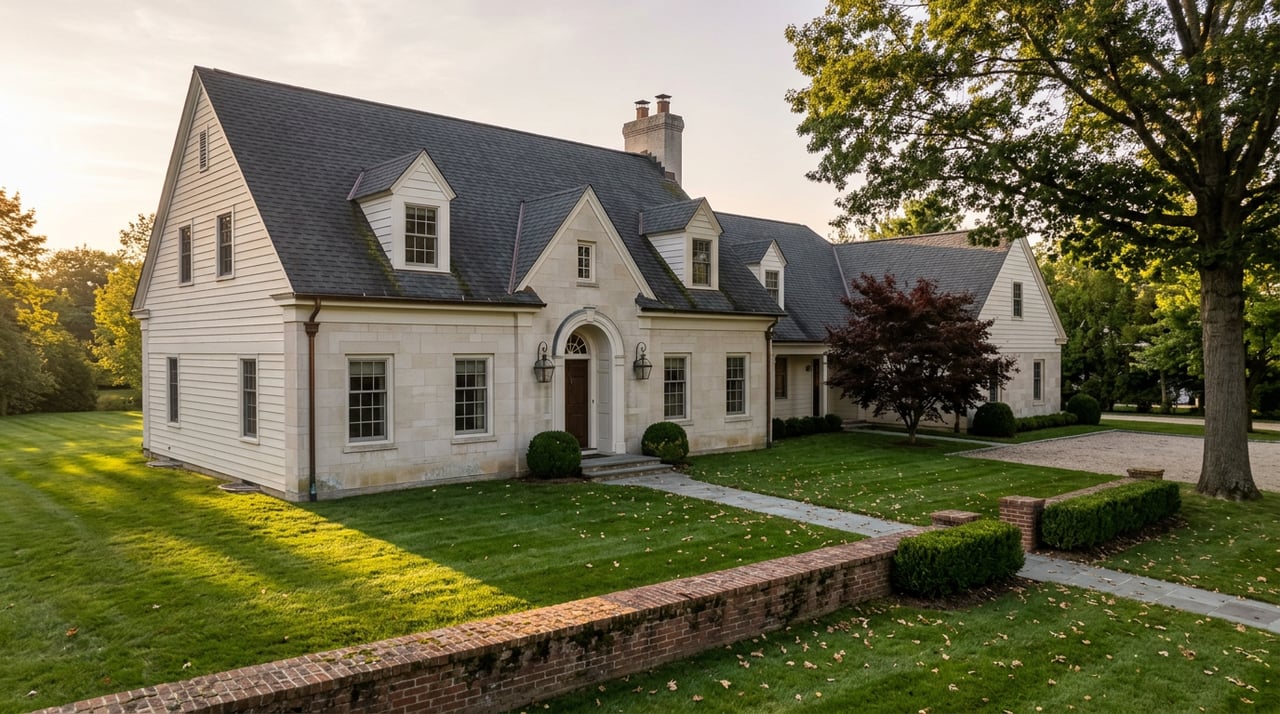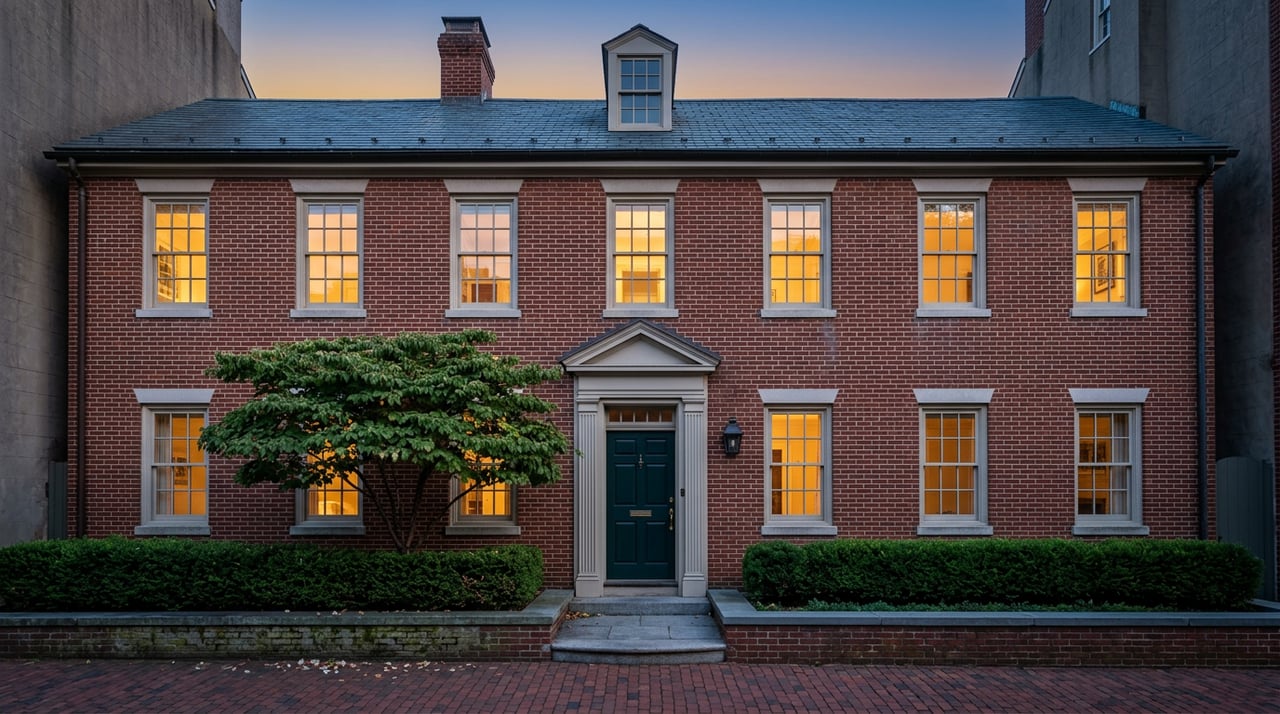
Two homes in Lincoln can sit half a mile apart, both charming, both priced within a few thousand dollars of each other, and close on completely different timelines. Not because of financing. Not because of an appraisal gap. Because one sits on Lincoln Water Commission service and the other draws from a private well in the backyard.
That single fact triggers a state law most buyers never hear about until their agent mentions it mid-contract, and it has nothing to do with which village carries more prestige or which street photographs better for a listing. It has to do with plumbing history that goes back four decades.
The rule that only applies to some Lincoln homes
Rhode Island law requires that any home served by a private well have its water tested before the sale closes. The purchase and sale contract has to build in a ten-day window for that testing to happen, and the results become part of what the buyer is agreeing to before the deal is final. Homes on a municipal water system, meaning most properties connected to the Lincoln Water Commission, skip this requirement entirely. There is no test, no ten-day clock, no separate contingency tied to water quality.
That difference is the whole story. If you are comparing two Lincoln listings, the median price on the portal tells you nothing about which one comes with an extra step built into closing. You have to ask.
Why the answer splits along old village lines
Lincoln's water infrastructure follows the town's mill history almost exactly. The village cores that grew up along the Blackstone River during the manufacturing era, Lonsdale, Saylesville, Manville, and Fairlawn, are where the town's public water mains were laid first and have been maintained longest. Water Commission planning records show targeted main replacement work in these villages over the past two decades, including projects on Smith Street, Read Avenue, Pond Avenue, and Cabot Street in the Lonsdale and Saylesville service area, and cast-iron main replacement across Fairlawn, Manville, and Saylesville completed between 2015 and 2021.
The town's own water supply has a history worth knowing too. Lincoln originally relied on its own groundwater wells. In 1985 the Lincoln Water Commission connected to the Providence Water Supply specifically to replace groundwater sources that had been identified as contaminated. Everything the Commission delivers today traces back to that switch. A home on Lincoln Water Commission service isn't just avoiding a private well test. It's drawing from a system the town itself moved away from groundwater to fix.
Move away from those river-corridor villages, out toward Lime Rock and the newer subdivisions on the town's edges, and private wells become far more common. Local plumbing contractors who work across Lincoln describe exactly this pattern: a wide spread of water systems depending on whether a house sits in a historic mill village or in the more recently built areas further from the river. Rhode Island's Department of Environmental Management notes that more than a third of homes and businesses statewide rely on septic and well systems rather than municipal service, so this isn't a Lincoln quirk. It's just concentrated differently here than in a town without a mill-village core.
Here's what that pattern actually means for a transaction:
| Village core (Lonsdale, Saylesville, Manville, Fairlawn) | Upland or newer subdivision (Lime Rock area and similar) | |
|---|---|---|
| Typical water source | Lincoln Water Commission, via Providence Water since 1985 | More often a private well |
| State well-testing law applies | No | Yes |
| Contract contingency | None specific to water source | Ten-day testing window required by law |
| What can slow the timeline | General municipal items, main work in the area | Lab turnaround, retesting if results come back positive, corrective action if the well fails compliance |
What happens if the water fails the test
This is where the ten-day window can turn into something longer. Results from a certified lab typically take ten to fifteen business days, which already presses against the standard contract window before anyone accounts for a retest. If a well tests positive for something like coliform bacteria, most transactions need a follow-up sample before anyone can move forward, since a single positive result is treated as unresolved until a clean retest confirms it.
The stakes go beyond delay. Under Rhode Island law, a certificate of occupancy cannot be issued for a home on a private well until the owner has submitted documentation showing the well meets drinking water standards for coliform bacteria, fluoride, lead, nitrate, and nitrite. If a well fails, the owner has thirty days to complete corrective action, with the option to request a ninety-day extension from the town's Building Code Board of Appeals. For a seller counting on a clean, on-schedule closing, that is a meaningfully different negotiation than anything a municipal-water seller ever has to think about.
None of this is about Lincoln's wells being unsafe. It's about the fact that the legal machinery only engages for some addresses, and knowing which category a property falls into before you write an offer changes how you plan the weeks that follow.
What this means before you write the offer
If you're buying in Lincoln, ask about the water source on day one, not during the inspection period. If the answer is a private well, build the ten-day testing window into your planning from the start rather than discovering it after you're already under contract with a tight closing date. Ask when the well was last tested and whether there's any history of bacteria, since that history determines whether you should plan for a retest buffer before you ever get to the closing table.
If you're selling a home on a private well, testing before you list removes the biggest unknown from your timeline. A result in hand before the first showing means you're negotiating from documentation instead of hoping the test clears in time. Samples for state lab testing are processed at Rhode Island's State Health Laboratories at 150 Richmond Street in Providence, and results are typically returned within ten to fifteen business days.
If you're selling in a village core on municipal service, this entire section doesn't apply to you, and that's worth saying to a buyer directly. It's one less contingency, one less thing that can stall a closing date, and it's a fact your listing can state plainly.
One more piece of current context worth knowing: the Lincoln Water Commission implemented mandatory odd-even outdoor watering restrictions for its customers effective July 3, 2026. That's a rule that only touches municipal customers, another small but real reminder that being on the town system and being on a private well are two different regulatory worlds inside the same town.
Frequently asked questions
How do I find out whether a specific Lincoln address is on a well or town water before I make an offer? Ask your agent to confirm with the seller or check with the Lincoln Water Commission directly. Village location is a reasonable starting clue, since core mill villages are more likely to be on the municipal system, but individual addresses can vary and should be verified rather than assumed.
What if the well fails the required test? State law gives the owner thirty days to complete corrective action, with a possible ninety-day extension through the town's Building Code Board of Appeals. A certificate of occupancy cannot be issued until the well meets the required drinking water standards.
Does this apply to condo units in converted mill buildings? Mill conversions sit within the historic village cores where public water and sewer infrastructure already reaches the block, so private well testing is less likely to apply. Still, confirm the specific building's utility setup rather than assuming based on the neighborhood alone.
Every Lincoln address carries its own utility story, and that story shapes the closing calendar more than the listing photos ever will. If you're weighing a purchase or preparing to sell in Lincoln and want a clear read on what a specific property's water source means for your timeline, Gina DiCenzo Moynihan and the team at DiCenzo Advisory are glad to walk through it with you. Schedule a free consultation and get the answer before you write the offer, not after.